
KUALA LUMPUR · HERITAGE & ARCHITECTURE
A Railway Station That Makes You Look Twice
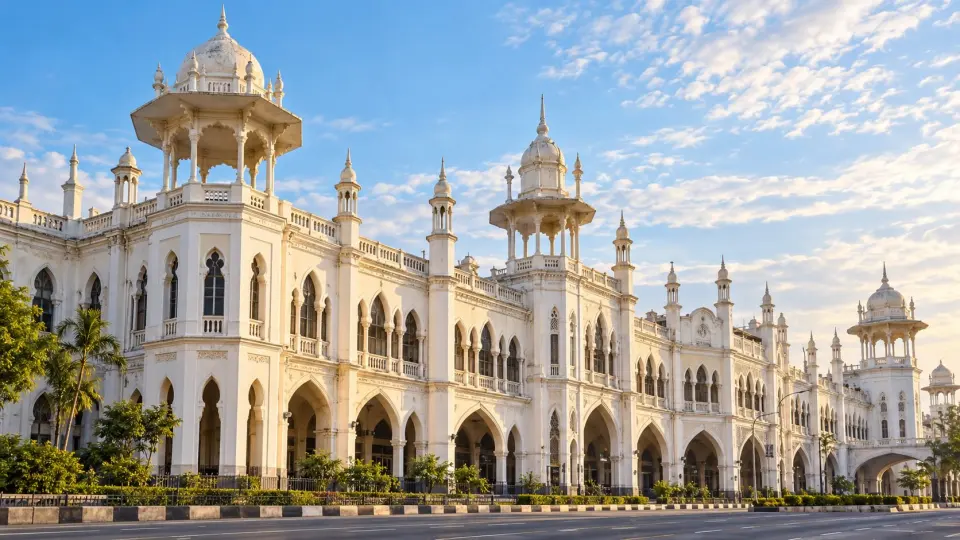
Look up before you look for the platform. At the old Kuala Lumpur Railway Station, the roofline is part of the attraction: pale towers, rounded domes and a long sequence of arches create an outline that feels closer to a palace than an everyday transport building.
That palace comparison describes its appearance, not its original purpose. This was built for rail travel. Its interest lies in the meeting of a practical job—moving passengers—with a memorable public face. For travellers who enjoy buildings with a story, it offers a different way to experience Kuala Lumpur beyond the familiar skyline.
Why This Building Matters to Kuala Lumpur
A station can be read as a city’s front door. Before a visitor sees a hotel, market or civic square, the arrival building creates an impression of the place. The Warisan KL heritage account describes this station as a major centre for the Federated Malay States Railways, replacing an earlier single-storey building.
This gives the architecture a useful context. It was not simply decoration added to a platform: the station brought arrival, waiting and railway activity into a prominent civic setting. When you photograph it, consider including the length of the façade rather than only one tower. That wider view helps communicate the scale of the transport building.
Who Designed Kuala Lumpur Railway Station?
Tourism Malaysia identifies the architect as Arthur Benison Hubback, commonly written as A. B. Hubback. The specialist A. B. Hubback Project records his role on the project as Federal Public Works Department Assistant Architect.
The same research project reproduces historical correspondence and newspaper accounts, making it a useful companion for readers who want more than a short landmark description. Rather than treating the building as the work of one person alone, remember the wider process behind a railway project: architectural design, construction, platforms, roofing and day-to-day operation.
1910 or 1911? Understanding the Dates
Visitors will encounter both years. Tourism Malaysia gives 1910 as the completion year. Warisan KL distinguishes completion in 1910 from official opening in 1911.
The A. B. Hubback Project also places the opening in 1911 and reproduces a contemporary account describing the station’s ground floor in use while its hotel floor was not yet complete. These records show why “completed”, “opened” and “fully finished” should not automatically be treated as the same milestone.
For this guide, the clearest description is a landmark of the 1910–1911 period, with the source distinctions retained. We do not settle on a precise opening day because published accounts are inconsistent.
How to Read Its Palace-Like Architecture
Architectural descriptions use several related labels. Tourism Malaysia describes Mughal domes and pointed arches; Warisan KL uses Neo-Mughal and Saracenic terminology; the Hubback Project calls the design Mughal Eclectic. For a visitor, understanding the visible features is more useful than trying to force all these descriptions into a single label.
| Look for | What to notice |
|---|---|
| The roofline | Observe how domes, small pavilions and slender towers break up the long silhouette. |
| The arches | Compare the shapes and repetition; use them to frame a photograph from a permitted public area. |
| The colonnades | Look along the covered frontage to appreciate depth, shade and repeated structural elements. |
| The whole façade | Step back where safe and permitted to see how the separate details form one composition. |
The palace-like impression is an architectural response to the building’s silhouette. It does not make the station a royal residence or a religious building. Keep that distinction clear when describing your photographs.
The Unexpected Chapter: A Station with a Hotel
One of the building’s most engaging stories is its original combination of railway station and hotel. The Hubback Project records 16 hotel bedrooms on the upper floor, alongside the station’s passenger facilities.
That changes how you might imagine a historic arrival. Instead of stepping off a train and immediately searching for another address, a traveller could have accommodation within the station complex. The building joined movement and rest in one place.
This is historical context, not a current hotel recommendation. Do not assume the former hotel rooms are bookable, open for viewing or included in a public visit. Check a current operator or official programme if access to a particular interior is important to you.
The Railway Administration Building Is a Separate Landmark
The railway story continues across Jalan Sultan Hishamuddin. Tourism Malaysia highlights the railway headquarters opposite the station, and Singapore’s National Heritage Board collection record distinguishes the station, dated 1910, from the Railway Administration Building, dated 1917.
They are related parts of a railway landscape, but they are not the same building. Use separate photograph captions and check the map pin carefully when arranging a stop. Viewing buildings across a road does not imply access to their offices or grounds.
Old Kuala Lumpur Station vs KL Sentral
This distinction is especially useful if you are combining sightseeing with a real train journey. Tourism Malaysia states that KL Sentral took over the role of the city’s main rail terminal in 2001.
| Name | How to use it in your plan |
|---|---|
| Kuala Lumpur Railway Station | The historic landmark on Jalan Sultan Hishamuddin. KTMB includes Kuala Lumpur among its station listings; consult the current service timetable for travel. |
| KL Sentral | A separate transport hub. Do not substitute the old station as your destination when your ticket or connection specifies KL Sentral. |
Use the exact station name on your ticket. Check KTMB station information and the current timetable for services, disruptions and departure details. A heritage guide should not replace those travel instructions.
Visiting During a New Chapter of Conservation
Warisan KL describes the station as part of an ongoing heritage rejuvenation effort, with Railway Assets Corporation involved in conservation. Treat this as a reason to check current arrangements rather than a promise that a completed visitor attraction is open.
Our suggested visit centres on appreciating the building from permitted public areas. Work zones, barriers and railway operations may affect your route or views. No fixed sightseeing opening hours, interior admission price or guided-tour availability have been independently confirmed for this article.
- Follow signs and staff directions, including any temporary diversions.
- Keep station entrances and passenger routes clear while taking photographs.
- Use designated pedestrian crossings; do not stand in the road for a wider angle.
- Do not enter tracks, operational areas, closed corridors or work sites.
- If you need step-free access, confirm the actual route and facilities before travelling.
Photography: Make the Architecture the Subject
Begin with a wide view that includes the roofline, then make a second image around a smaller detail. Arches, repeated columns and the contrast between bright walls and shaded openings can give you several compositions without needing access to restricted areas.
Choose your position around safety and permission first. A photograph from the edge of a busy roadway is not worth the risk, and a working station should remain easy for passengers to use. If a desired viewpoint is obstructed, adapt the composition rather than moving a barrier or entering a closed area.
For a blog or travel journal, label the building accurately and keep the railway headquarters separate. If restoration scaffolding appears in your photo, include the date; it helps future readers understand what they are seeing.
Add It to a Heritage-Focused Kuala Lumpur Day
Let this stop provide the railway chapter of your city visit. You can then choose a different kind of heritage experience rather than filling the day with buildings that feel identical.
- Start with the station exterior: look at the full façade and a few architectural details.
- Notice the administration building: view it from a safe, permitted location and keep the two buildings distinct.
- Choose the next district: continue towards Merdeka Square and Sultan Abdul Samad Building, or Central Market and Chinatown, according to your interests.
- Leave time for a break: allow for weather, traffic and the walking pace of your group.
This is a suggested sequence, not a verified continuous walking trail or timed package. Check current pedestrian connections and access before deciding which legs to walk. Read our Sultan Abdul Samad Building travel guide for a deeper look at another landmark, or use the Kuala Lumpur one-day itinerary to balance heritage with other city highlights.
Planning Transport with Valetra
If the station is one stop in a wider private sightseeing day, share the full itinerary with Valetra: hotel pickup, the landmarks you want to see, passenger count, luggage and any mobility considerations. Ask the team to check route coverage, vehicle availability and a suitable permitted drop-off arrangement.
A one-way transfer and a multi-stop chauffeur itinerary have different scopes. Confirm stops and waiting requirements before booking. A transport arrangement does not include permission to enter a heritage building or a guided interior visit unless those elements are specifically confirmed.
For more ideas beyond this station, browse our best places to visit in Kuala Lumpur.
Frequently Asked Questions
Where is the old Kuala Lumpur Railway Station?
It is on Jalan Sultan Hishamuddin in Kuala Lumpur. Use the historic station’s exact map pin; it is not KL Sentral.
Who designed Kuala Lumpur Railway Station?
The station is associated with architect Arthur Benison Hubback, usually called A. B. Hubback.
Was the station built in 1910 or 1911?
Tourism Malaysia gives 1910 as completion, while Warisan KL distinguishes completion in 1910 from official opening in 1911. This guide describes it as a landmark of the 1910–1911 period without asserting a precise opening day.
Why does the station look like a palace?
Its domes, slender towers, arches and long façade create a palace-like appearance. It was built for railway use, not as a royal residence.
What is its architectural style?
Sources use related descriptions including Neo-Mughal, Saracenic and Mughal Eclectic. The visible features include domes, towers, arches and colonnades.
Did the station originally have a hotel?
Yes. The A. B. Hubback Project records an original station hotel with 16 bedrooms. This does not establish current accommodation or access to the former rooms.
Is Kuala Lumpur Railway Station the same as KL Sentral?
No. They are separate stations. KL Sentral took over the main terminal role in 2001. Follow the exact station named on your ticket.
Can visitors enter all parts of the station?
Do not assume unrestricted access. Railway operations, conservation work and staff instructions may limit where visitors can go. Confirm any interior visit separately.
Is the building opposite the station the same landmark?
No. The Railway Administration Building is a separate building opposite the station. Keep the two names distinct when planning a stop or captioning photographs.
Can Valetra help arrange a heritage sightseeing journey?
Share your pickup, planned stops, passengers, luggage and any assistance needs with Valetra. The team can check route coverage, availability and a suitable transport arrangement; building access is separate.
TRAVEL WITH VALETRA
Discover the Stories Behind Kuala Lumpur
Make the old railway station part of a heritage day shaped around your group. Visit our website and open LIVE Chat to discuss your hotel pickup, preferred stops and travel requirements.
Plan Your KL Heritage Journey