
JOHOR BAHRU HERITAGE · LANDMARK STORIES
A Landmark Above Johor Bahru
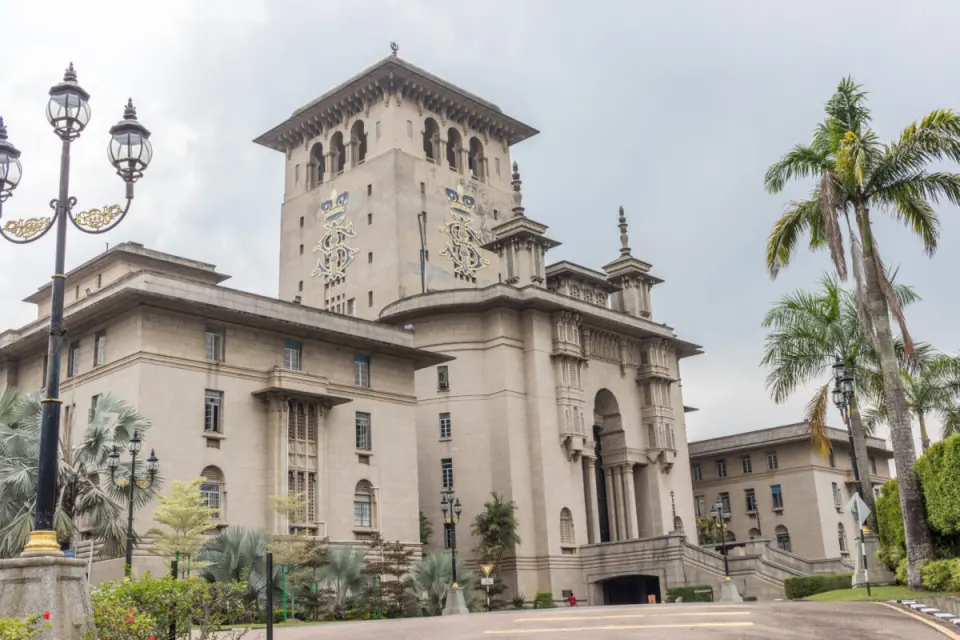
Look towards Bukit Timbalan in central Johor Bahru and the Sultan Ibrahim Building stands out above the city. Its tower and substantial façade are part of the familiar skyline, but the story behind this landmark reaches beyond architecture.
The building was associated with Johor’s state administration and later with a difficult chapter of the Second World War. Its decorative details also recall crops once important to Johor. For visitors, it offers a starting point for understanding a city often seen only as a shopping or family-holiday destination.
This guide explores the Sultan Ibrahim Building’s history, its connection to Sultan Ibrahim, what to notice on the exterior and how to include it in a respectful Johor Bahru heritage visit.
Sultan Ibrahim Building at a Glance
| Topic | What visitors should know |
|---|---|
| Malay name | Bangunan Sultan Ibrahim |
| Location | Bukit Timbalan, Johor Bahru, Johor, Malaysia |
| Historical role | A former centre of Johor state administration |
| Architecture | Johor Malay, Islamic and colonial influences described by Johor Bahru City Council |
| Historical period | Developed during Sultan Ibrahim’s reign; sources differ on the completion year |
| Visiting | Plan an exterior heritage stop; confirm current access before attempting to enter |
Where Is Sultan Ibrahim Building?
The building stands on Bukit Timbalan in Johor Bahru, overlooking part of the city. Johor Bahru City Council lists its address along Jalan Abdullah Ibrahim, Bandar Johor Bahru. When requesting transport, use the destination name as well as your chosen public meeting or viewing point so the driver can assess the route.
The elevated setting helps explain why the landmark is visible as part of the city’s skyline. It also means a visit may involve slopes or walking depending on where you stop. Ask about an appropriate public drop-off point, and follow any signs or instructions from security personnel.
For the council’s description and location, see Johor Bahru City Council’s Sultan Ibrahim Building page.
Who Was Sultan Ibrahim?
The building is associated with Sultan Sir Ibrahim ibni Almarhum Sultan Abu Bakar, who ruled Johor during an era of significant change. The Johor coronation website describes developments during his reign including railway connections, education initiatives and the growth of state administration.
In its history of the Johor Sultanate, the same source records that the building on Bukit Timbalan housed government departments. The name is therefore a useful way to begin exploring both the landmark and the wider period in which Johor’s administrative institutions developed.
For that broader historical context, read the official history of the Johor Sultanate. The historical Sultan Ibrahim associated with the building should not be confused with later rulers who share the name.
Why Was the Building Important to Johor?
Government work needs places where officials can meet, handle records and provide administrative functions. The Sultan Ibrahim Building became associated with those activities, housing state government departments on Bukit Timbalan.
A Johor state government publication describes it as an important former centre of state administration. Its scale and hilltop position made it more than a practical office building: for many visitors, its tower became a visible reminder of Johor Bahru’s role as the state capital.
Today, understanding that former role adds meaning to an exterior visit. The building is not simply a backdrop for a photograph; it represents a period in which public institutions and the city around them continued to evolve.
Read the background published by Media Digital Johor for more on its administrative significance.
When Was Sultan Ibrahim Building Completed?
Several accounts place the building’s development in the late 1930s and early 1940s. However, the sources do not all state the same completion year.
Johor Bahru City Council describes the building as built in 1940. The official Johor coronation website’s history of the Sultanate states that it was completed in 1941. These are separate published accounts; we have not established whether the difference reflects construction, completion, opening or another milestone.
For that reason, it is safer to describe the landmark as a late-1930s to early-1940s project than to present one year as unquestionably settled. Readers interested in the date can compare the city council account with the Johor Sultanate history.
Architecture: What to Notice on the Façade
The building’s silhouette is one reason it remains recognisable. A tall central tower, repeated windows and a broad façade create a formal composition that stands apart from many newer structures around the city.
Johor Bahru City Council describes the design as combining Johor Malay, Islamic and colonial architectural influences. Rather than reducing the building to a single style, look at the relationship between the tower, the façade and the decorative details.
One detail with a local story is easy to overlook: the council notes carvings of cloves and black pepper on the columns. These motifs refer to crops that were important to Johor at the time. From an appropriate public viewpoint, observe the structure first, then look more closely for the details that can be safely seen from outside.
Descriptions of the architect and the names used for particular architectural styles vary between available sources. We have not assigned an individual designer here without stronger corroboration.
The Building During the Second World War
The building’s elevated position also became significant during the Second World War. Johor Bahru City Council records that Japanese forces occupied the building and used it as a fortification and operations centre connected with the attack on Singapore.
That wartime chapter forms part of a wider and painful history affecting people across Malaya and Singapore. A short landmark visit cannot tell the whole story, but the hilltop location helps visitors understand why a prominent administrative building could also have strategic value.
We have avoided presenting unverified stories about individual officers, visible battle damage or precise events inside particular rooms. For the council’s account, see its heritage description of the building.
Can You Enter Sultan Ibrahim Building?
Do not assume that the building interior is open to the public. Access, security arrangements and permitted viewing areas can change. Plan around an exterior stop from an appropriate public viewpoint, and confirm current access with the relevant authority before arranging a visit that depends on entering.
A heritage listing may mention a proposed future use for the building; a proposal does not establish that a museum or interior tour is currently operating. Do not rely on older visitor reviews for opening hours or admission.
- Follow signs and instructions from security or staff.
- Do not enter restricted grounds or block gates, roads and pedestrian routes.
- Ask before photographing people, security areas or activities where restrictions apply.
- Keep plans flexible if a public viewpoint is unavailable on your visit date.
How to Appreciate and Photograph the Landmark
Begin with a wide view that shows the tower and the building’s position on the hill. If an appropriate public viewpoint is available, compare the building’s scale with nearby streets and the skyline.
Then look for details: the tower’s vertical lines, the rhythm of the windows and façade, and the decorative motifs described by the city council. Distance, lighting and access will affect what can actually be seen; bring a suitable lens rather than entering a restricted area to get closer.
Morning and late-afternoon light may offer different photographic moods, but shade, weather and the direction of the building will affect the result. Stay clear of traffic and avoid stopping where pedestrians or other vehicles need to pass.
Explore More of Johor Bahru’s Heritage
A single landmark tells one part of Johor’s story. Other places in the wider city offer different perspectives on religious life, local communities and the adaptation of older buildings.
| Nearby heritage idea | Why include it | Planning note |
|---|---|---|
| Sultan Abu Bakar State Mosque | An important religious and architectural landmark overlooking the Johor Strait | Respect prayer times, dress guidance and site instructions; confirm visitor access |
| Johor Bahru Old Chinese Temple | A place connected to the history of local Chinese communities | Respect worshippers and ask before photographing ceremonies |
| Jalan Tan Hiok Nee heritage area | Historic streets and shophouse surroundings in central Johor Bahru | Allow time to explore the area and check individual business opening times |
| Kota Jail heritage site | An example of an older site given a new visitor-oriented use | Check current access, exhibitions and opening information before travelling |
For an overview of these and other places, read our seven historical places in Johor Bahru guide. It introduces multiple landmarks; this article focuses on the Sultan Ibrahim Building itself.
A Flexible Johor Bahru Heritage Itinerary
For a half-day city outing, select a few stops rather than trying to cover everything. The order below is an idea, not a fixed tour or guarantee of admission:
- Sultan Abu Bakar State Mosque: start with an exterior view when visitor access is suitable.
- Sultan Ibrahim Building: observe the façade from an appropriate public viewpoint.
- Old Chinese Temple and surrounding streets: explore local community heritage respectfully.
- Jalan Tan Hiok Nee area: take a break and explore the historic streets and nearby food options.
Adjust the order for traffic, weather, prayer times, mobility needs and the latest access information. If your group prefers more time at one site, remove a stop rather than rushing. Our first-time Johor Bahru visitor guide offers more ideas for building a balanced day.
Getting Around Johor Bahru
A city itinerary can include a mixture of walking and transport. Before choosing, consider the weather, whether anyone has difficulty walking on slopes, how long your group wants to spend at each stop and the available parking or drop-off points.
For selected Johor Bahru journeys, Valetra can assess a pre-arranged private transfer or a city chauffeur itinerary based on the route, travel date and vehicle availability. An hourly city charter has its own minimum duration and service conditions; individual attraction access and admission are not automatically included.
Share your hotel or pickup address, passenger count, preferred stops and timing before quotation. An authorised local tourist guide, entry tickets or specialist assistance should be requested separately when needed and confirmed before booking.
Standard bookings require at least 12 hours before pickup. During 8:00 AM–9:00 PM Malaysia time, requests at least 2 hours before pickup may enter pre-approval; Operations checks availability before payment becomes available, and successful payment confirms the booking. Outside these hours, the normal 12-hour requirement applies.
For general hotel journey planning, see the Johor Bahru hotel transfer guide.
Frequently Asked Questions
Where is Sultan Ibrahim Building?
The building is located on Bukit Timbalan in Johor Bahru, Johor. Johor Bahru City Council lists it along Jalan Abdullah Ibrahim in Bandar Johor Bahru.
What is Sultan Ibrahim Building known for?
It is a Johor Bahru landmark associated with former state administration, a distinctive tower and façade, and a wartime role during the Second World War.
Who was Sultan Ibrahim?
The landmark is associated with Sultan Sir Ibrahim ibni Almarhum Sultan Abu Bakar, who ruled Johor during a period of significant administrative and infrastructure development.
When was Sultan Ibrahim Building completed?
Sources differ. Johor Bahru City Council describes it as built in 1940, while the official Johor coronation website states it was completed in 1941. The reason for the difference has not been established in this guide.
What architectural styles influenced the building?
Johor Bahru City Council describes the building as combining Johor Malay, Islamic and colonial architectural influences.
What do the decorative carvings represent?
Johor Bahru City Council identifies clove and black pepper carvings on the columns as symbols of crops important to Johor at the time.
What happened at the building during the Second World War?
Johor Bahru City Council records that Japanese forces occupied the building and used it as a fortification and operations centre connected with the attack on Singapore.
Can visitors enter the building?
Do not assume interior access is available. Plan an exterior stop from an appropriate public viewpoint and confirm current access with the relevant authority before visiting.
What other heritage places can I visit in Johor Bahru?
Depending on access and opening arrangements, you can consider Sultan Abu Bakar State Mosque, Johor Bahru Old Chinese Temple, Jalan Tan Hiok Nee and Kota Jail. Follow site rules and plan a manageable route.
Can I arrange transport for a Johor Bahru heritage itinerary?
Valetra can assess selected private transfer or city chauffeur requests based on the itinerary, date, route and availability. Confirm the service scope, applicable minimum duration and any guide or admission requirements before booking.
EXPLORE JOHOR WITH VALETRA
Discover Johor Bahru’s Heritage at Your Own Pace
Planning a heritage day around Bukit Timbalan and the old city? Share your preferred stops, pickup location and travel date to explore suitable transport options with Valetra.
Plan Your Johor Bahru Journey